
Expert opinion of the President of UAVtormet Vladimir Bubley
04.09.2020
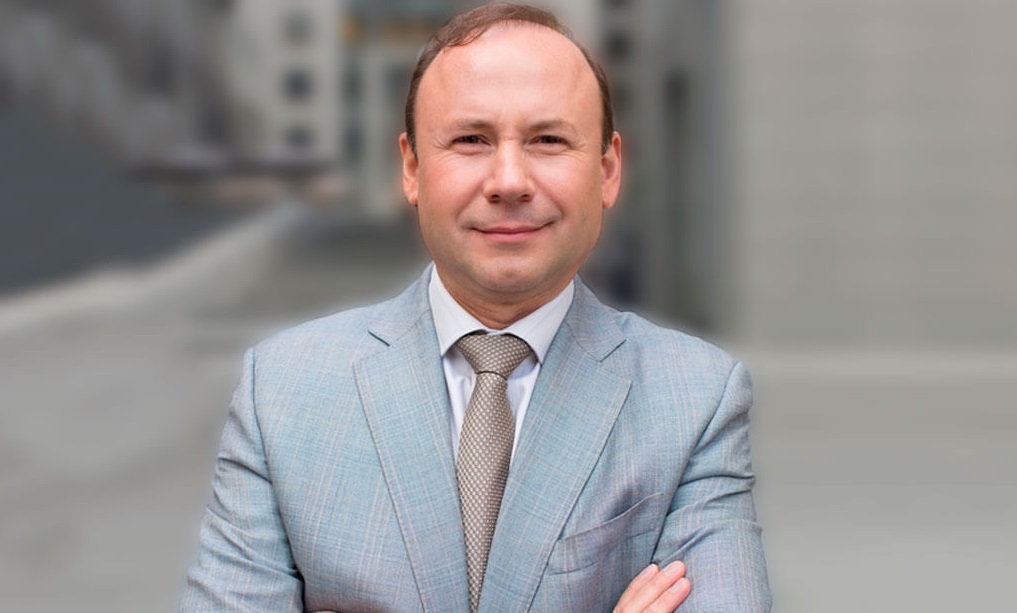 Expert opinion of the President of UAVtormet Vladimir Bubley in the material NV >>
The total stocks of scrap metal in Ukraine as of the beginning of 2020 were estimated at 350-360 million tons, of which about 75% falls on the fixed assets of enterprises, about 5% - on transport and infrastructure, about 8% - on household scrap and about 12% - for other "complex" scrap metal. At the same time, the renewal of fixed assets is extremely slow, which affects the quality of scrap - the share of household and lightweight scrap is growing. At the same time, significant quantities of raw materials are observed, which require additional costs for extraction and processing.
Considering the average life of fixed assets, which is about 25-30 years, the country is potentially able to generate scrap metal in the amount of up to 5.0-6.0 million tons annually. Similar indicators were demonstrated in the early 2000s - a period of relatively free market relations, when the price was formed solely on the basis of the ratio of "supply and demand". Of course, this state of affairs could not persist for a long time in the conditions of the oligarchic state formed by that time.
Historically, tariff and non-tariff restrictions have been consistently applied in the scrap collection industry with varying degrees of success. Almost all state bodies considered it their duty to regulate the scrap market - from the district police department to the highest state bodies. The reason for the increased interest in the scrap metal market is trivial - high corruption opportunities.
The apogee of state regulation, under the pretext of taking care of the national industry, was the introduction of an export duty of 58.0 euros / ton, as well as unspoken and dubious bans on the export of scrap to the Moldovan Ministry of Health, although there are no special obstacles regarding the import of finished metal products from this plant. It was. To date, another far-fetched and inexplicable obstacle to the export of scrap metal has emerged - the lack of a practical possibility of issuing certificates of origin of EUR.1 scrap metal, which is necessary for deliveries to EU countries.
Taking care of the national producer over the past five years has resulted in a 1.32 million tonne reduction in scrap metal procurement (to 3.3 million tonnes in 2019 and is expected to reach 2.6 million tonnes in 2020). The market is rapidly degrading, and this is taking place against the backdrop of the introduction of modernized steel and rolled steel production facilities by metallurgists, which significantly reduce the amount of recycled scrap metal, and, consequently, an increase in demand for high-quality imported raw materials in large volumes.
In the short term (next three years), Ukrainian metallurgists and foundry workers are planning to almost double the consumption of imported scrap metal - from the current 3.0 to 5.0 million tons per year. Thus, a real deficit in the supply of scrap metal is possible, as well as competition for it among consumers. And here I would like to dwell in more detail on two aspects of the scrap collection industry, which significantly affect the choice of further market development scenarios.
If we compare the steel production market of the EU and Ukraine, then the technologies are used approximately the same - electric arc furnaces and converters. However, the structure of scrap collection is significantly different. Thus, in the EU, municipal (household) scrap accounts for up to 50% of the total scrap collection and up to 20% is depreciation scrap.
In Ukraine, the situation is exactly the opposite. Up to 75% of the total volume is depreciation scrap, that is, the scrap that must actually not be collected, but "extracted" from buildings, structures, decommissioned equipment. All this requires a large amount of investment and a relatively long return period. And investing in projects of this kind, especially in an oligarchic market, can only be those companies that divide this market among themselves. But even these companies have limited budgets and they are not able to develop all the "scrap-containing" objects.
Under these conditions, metallurgists are trying to use various methods to reduce purchase prices for suppliers (prepayment, hedging prices for a certain volume, etc.). However, all these activities do not lead to positive dynamics of scrap collection.
A separate and rather painful topic, especially for metallurgists, is the quality of the supplied scrap metal.
European legislation rather strictly regulates the quality parameter of contamination with harmless impurities - no more than 2%. Excess, and especially deliberate "improvement" of quality, especially packages, entails quite painful consequences, up to criminal prosecution. In our reality, they are quite loyal to this indicator.
The second key parameter is thickness and linear dimensions. And if in the EU countries deliveries to consumers are carried out separately by type (thick-walled / thin-walled; new / old; packaged / shredded), then in our conditions almost everything goes in a mixed form, as a rule only reduced to overall dimensions and neatly packed into the transport means. After unloading, such scrap metal has a bulk density of no more than 0.6 mt / m3 and a contamination of about 3-3.5%. Metallurgists, both in the EU and in Ukraine, need bulk density parameters in the range of 1.0-1.1 mt / m3 and contamination up to 1%.
Nevertheless, the ways to achieve the above parameters in the EU and Ukraine are diametrically opposite: if European metallurgists, paying a competitive market price, require the supply of high-quality prepared scrap metal, divided by types and sources of At the same time, they attract scrap metal of any quality (the main thing is quantity), and then bring it to the required parameters by organizing additional processing directly on the territory of metallurgical plants, thereby reducing the scrap industry to the level of simply collectors of raw materials. This makes it unnecessary neither the presence of expensive scrap processing equipment at the sites, nor qualified personnel, nor investment in the preparation of the charge for consumers.
What are the likely paths for the development of an industry with such potential?
The first is European:
- building an open market model of functioning with limited government regulation
- reduction of the export duty rate to an economically justified level of 10-15 euros / ton
- stimulating the supply of well-prepared scrap metal, divided by types and sources of education
- maintaining the level of purchase prices at a level that stimulates investment both in the sources of the formation of scrap metal and scrap processing equipment
If the situation develops according to the European scenario, the Ukrainian scrap metal market will develop dynamically. Market pricing, healthy competition and clear “rules of the game” will allow us to reach a completely new level of procurement and processing of scrap metal.
With such a development vector, an increase in scrap metal procurement should be expected - according to our estimates, the total scrap procurement may grow to 5.0-6.0 million tons / year. Accordingly, the quality of the raw materials procured and offered on the market will increase - it will be profitable to develop metal-intensive objects containing heavy scrap, to process scrap metal to the state of a charge material that can be loaded into a melting unit, etc.
The market will become attractive for investments. And this will allow introducing new technologies for processing scrap metal, purchasing scrap processing equipment, creating new jobs, and paying taxes. With an increase in the volume of scrap procurement, it is possible to expand the metallurgical and foundry production, the construction of new mini-plants, etc.
The second is oligopolistic:
- preservation of prohibitive tariff and non-tariff restrictions on exports
- opaque pricing
- lack of quality parameters of the supplied raw materials
- attempts to divide the market between a limited number of consumers both on a regional basis and on the basis of dividing suppliers into “ours” and “others”
- a shift in emphasis in bringing to the required quality parameters directly at metallurgical plants
The pessimistic version of the development of events - "oligopolistic", deprives the prospects of economic activities associated with the procurement and processing of scrap metal in Ukraine. In such conditions, the scrap metal stock will fall. The quality characteristics of raw materials will become a secondary factor. Then there will really be a shortage of scrap metal - of high quality and at an adequate price.
Import will definitely not help us, since its organization is associated with huge additional costs (difference in track gauge, remoteness of the bulk of steel producers from major seaports, inadequate tariffs for transshipment of goods, etc.)
And if in the first case we see in the future a surplus structured civilized market, then, while maintaining the existing and emerging trends in the Ukrainian market, the problems of the industry will only worsen, and the deficit of scrap metal (with a huge potential) will only increase.
Price comparison. The current level of purchase prices in Ukraine is $ 190-195 per ton, with delivery to the plant. For comparison, in Poland the purchase price of enterprises is $ 240-245 per ton, CFR, in Hungary - $ 245-250 per ton, CFR. For export, European scrap is offered at $ 260-265 per ton, FOV Rotterdam.
In conclusion, I would like to note the following. Procurement and processing of scrap metal is a full-fledged branch of the Ukrainian industry, which provides metallurgists with important raw materials. Like other sectors of the national industry, our industry needs development, modernization and investment. The support and understanding of the problems on the part of state authorities, which, unfortunately, we do not see yet, are especially important for our industry.
NV material >>